

Light Curtains
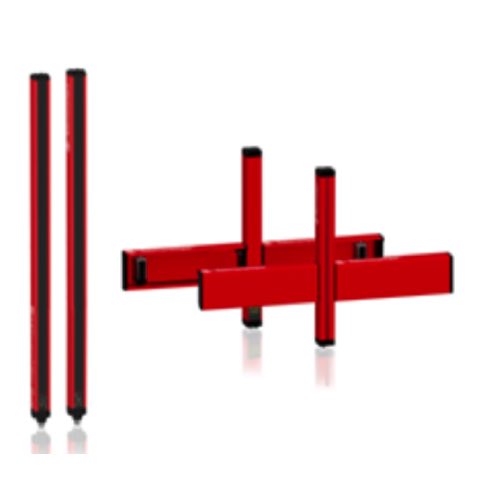
Light curtains are vital safety devices in the industrial world. They assure the personnel and equipment working nearby that they are safe from the hazards associated with machinery and automated systems. The devices consist of two integral parts: a transmitter and a receiver. When an object passes through or blocks the infrared beams that the light curtain sends out across the sensing field that tells the machine to shut down promptly. These devices are particularly good at protecting workers in hazardous machinery areas where physical barriers might not be practical.
Light curtains, which are often used for safety in dangerous situations, are employed in many applications that allow for frequent access to hazardous areas. These includes places like assembly lines in a factory, where workers must work in close quarters to large machines and hazardous materials. Because they use light to detect when things are amiss, light curtains are great in tight spaces, where more traditional safety measures might not be practical. Some light curtains are even rugged enough to be used in places like certain assembly line stations, where the light beams might get covered in dirt and grease.


More Information about Light Curtains
Reducing downtime, increasing efficiency, and enhancing safety are the three major payoffs from using safety light curtains. They are versatile devices, used for many applications, from hand protection to arm detection, with a wide variety of models that meet different industrial needs. Because of that, light curtains can be considered an indispensable part of modern safety systems. Those three main payoffs come directly from what a light curtain does and how it does it. Another payoff that is sometimes not mentioned in connection with light curtains is the preservation of machinery. Light curtains protect personnel; at the same time, they extend the life of the equipment.
FAQs
What is a light curtain and how does it work?
A light curtain is a safety device used to protect personnel from hazardous machinery by creating an invisible infrared light barrier. When an object, such as a hand or body, interrupts the light beams between the transmitter and receiver, the light curtain sends a signal to stop or prevent machine operation. Light curtains are commonly used as a non-contact alternative to physical safety guards.
What are light curtains commonly used for?
Light curtains are widely used in industrial automation, manufacturing, robotics, packaging, material handling, and assembly lines. They protect operators during tasks such as loading and unloading machines, palletizing, and robotic work cells. Light curtains improve safety while allowing quick access to machinery without the delays associated with mechanical guards.
What types of light curtains are available?
Light curtains are available in different resolutions and safety ratings, including finger protection, hand protection, and body protection models. They also vary by protective height, sensing range, response time, and safety category. Selecting the correct light curtain depends on the hazard level, machine speed, required safety distance, and applicable safety standards.
How do light curtains differ from safety mats or safety interlocks?
Light curtains provide non-contact safety protection, allowing free access to machines without stepping on mats or opening physical guards. Safety mats detect pressure on a surface, while safety interlocks monitor doors or gates. Light curtains are often preferred where fast access, flexibility, and minimal obstruction are required, and they are frequently used alongside other safety devices for comprehensive machine safeguarding.
Do light curtains require alignment, testing, or maintenance?
Yes, light curtains require proper alignment during installation and periodic testing to ensure reliable operation. Routine maintenance includes verifying alignment, cleaning lenses, and conducting functional safety checks. Regular inspection helps ensure compliance with safety standards, reliable hazard detection, and long-term machine safety.