

Current Sensors
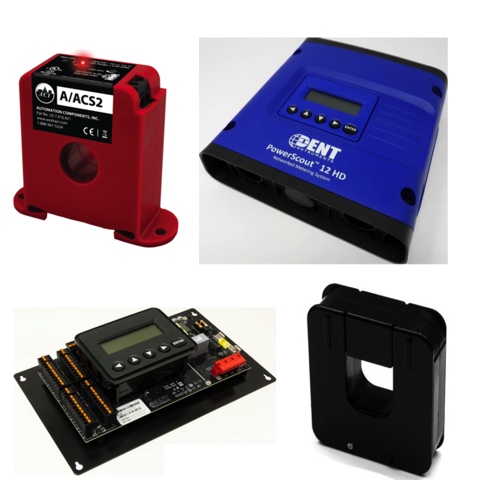
Current sensors are widely used measuring devices in industrial systems to assess electrical parameters, such as voltage, power, and current—data that these sensors provide in real time. A distinctive benefit of current sensors is that they can offer accurate measurement of the current flowing through a circuit without requiring direct contact with high-voltage lines. These sensors often operate using the magnetic field generated by electric current, so they can sense current with precision and near-perfect safety.
The types of Hall effect current sensors are the most commonly used in both open loop and closed loop configurations. Open loop sensors typically use a Hall element to detect the magnetic field and convert it into an output voltage which is then interpreted by the monitoring system. Closed loop current sensors improve on this by using feedback control to maintain a high degree of accuracy and linearity, making them ideal for high accuracy applications in power supply units, on board chargers, and high current systems. The use of a closed loop also helps reduce power loss and allows for better response time across a wide measurement range. Hall effect sensors are particularly effective in measuring both AC and DC currents.


More Information about Current Sensors
In industrial applications where electrical isolation is necessary, such as high-voltage and energy-sensitive installations, current sensors provide the needed separation between the monitored system and the sensing circuit. This is crucial in preventing damage to both the control systems and the operators. How does it work? In essence, all of the current-carrying conductors generate a magnetic field around them. In Hall effect sensors, this field is used to perform the current measurement, without providing a direct electrical connection. These sensors operate with high precision and have an excellent bandwidth. As more and more systems implement digital control techniques, current sensors that provide real-time feedback have become a foundation for energy management and system diagnostics.
FAQs
What is a current sensor and what does it measure?
A current sensor is a device used to measure the amount of electrical current flowing through a conductor or circuit. It detects AC or DC current without interrupting the circuit and converts that measurement into a readable electrical signal for monitoring, control, protection, or energy management purposes. Current sensors are essential for understanding load conditions, equipment performance, and electrical safety.
What are current sensors commonly used for?
Current sensors are commonly used for motor monitoring, energy management, load detection, fault detection, and equipment protection in industrial, commercial, and automation systems. They help operators identify overcurrent conditions, underload situations, phase loss, and inefficiencies before they lead to equipment damage or downtime. Many systems use current sensors for predictive maintenance and energy optimization.
What types of current sensors are available?
Common types of current sensors include current transformers (CTs), Hall effect sensors, Rogowski coils, and solid-core or split-core current sensors. Each type is suited for specific applications depending on current range, AC or DC measurement, installation constraints, and accuracy requirements. Selecting the right sensor depends on the electrical system and monitoring goals.
How accurate are current sensors and what affects accuracy?
Current sensor accuracy varies by technology and design, with many industrial sensors offering accuracy from ±0.5% to ±2%. Accuracy can be affected by sensor placement, conductor position, temperature changes, electromagnetic interference, and proper calibration. Using the correct sensor range and installing it according to manufacturer guidelines helps maintain reliable measurements.
Do current sensors require calibration or maintenance?
Most current sensors require minimal maintenance, but periodic inspection and verification are recommended to ensure reliable performance. Calibration needs depend on application criticality and accuracy requirements. Routine checks help identify wiring issues, sensor drift, or mechanical damage early, supporting long-term system reliability and accurate current measurement.