

Humidity Sensors
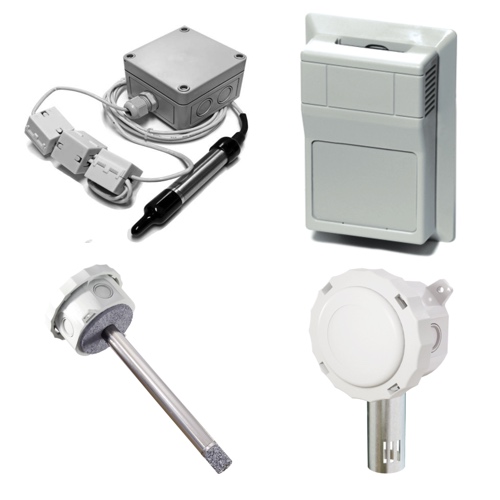
Humidity sensors detect and measure the quantity of water vapor in the surrounding air. They send out signals that provide critical data for a wide range of environmental control systems. Resistive humidity sensors and capacitive sensors are the most common types of humidity sensors. A resistive humidity sensor varies its electrical resistance in response to moisture in the air, offer a simple yet effective method for detecting changes in humidity. These sensors typically use materials placed between two electrodes to sense the moisture in the air.
Capacitive humidity sensors, in contrast, measure changes in the dielectric constant of their sensing material—an effect known as capacitive sensing—that is caused by water vapor in the air. Detecting relative humidity and absolute humidity are the same from the point of view of signal processing, and capacitive sensing is one of the two most common methods for measuring both kinds of humidity. Whether measuring shifts in humidity that are too subtle to notice or just detecting changes that are also hard to notice because they happen quickly, these two types of sensors are an effective means for air quality control.





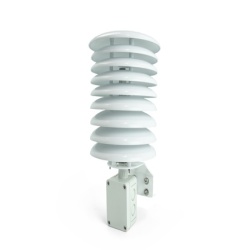
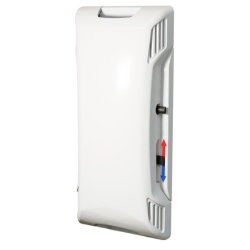
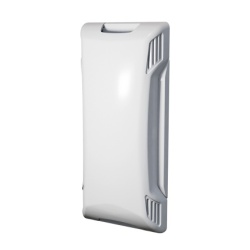
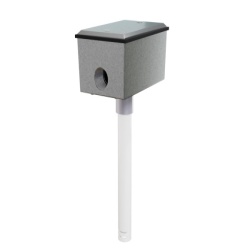
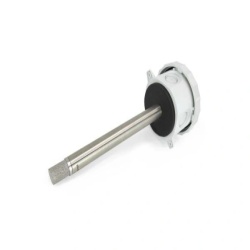
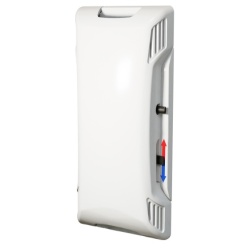


More Information about Humidity Sensors
In high-performance applications, humidity sensors are calibrated for accuracy and stability, which allows them to perform consistently in warm and wet-to-dry environments. These devices are used to monitor humidity levels in cleanrooms, storage facilities, greenhouses, and laboratories. By enabling systems to automatically adjust ventilation, air conditioning, or dehumidification functions, these same sensors contribute to better comfort, product quality, and energy efficiency. The ability to continuously measure the water vapor content in these dynamic environments gives the sensors an important role in maintaining the balance of temperature and humidity.
FAQs
What is a humidity sensor and what does it measure?
A humidity sensor is a device used to measure the amount of moisture in the air, typically reported as relative humidity (RH) and sometimes temperature or dew point. It detects water vapor levels and converts that information into an electrical signal for monitoring and control. Humidity sensors are critical for maintaining proper environmental conditions, product quality, comfort, and equipment protection.
What are humidity sensors commonly used for?
Humidity sensors are widely used in HVAC systems, building automation, manufacturing, cleanrooms, data centers, museums, agriculture, pharmaceuticals, and food storage facilities. They help regulate indoor comfort, prevent condensation or mold growth, protect sensitive equipment, and ensure compliance with environmental standards. Accurate humidity control is essential anywhere moisture impacts performance or safety.
What types of humidity sensors are available?
Common types of humidity sensors include capacitive, resistive, and thermal conductivity-based sensors. Capacitive humidity sensors are the most widely used due to their accuracy, stability, and broad measurement range. Selecting the right type depends on accuracy requirements, operating environment, temperature range, and long-term stability needs.
How accurate are humidity sensors and what affects their accuracy?
Humidity sensor accuracy typically ranges from ±1% to ±5% RH, depending on sensor quality and application. Accuracy can be affected by temperature fluctuations, condensation, contamination, aging of the sensing element, and calibration frequency. Proper installation, environmental protection, and regular calibration help maintain reliable humidity measurements.
Do humidity sensors require calibration and maintenance?
Yes, humidity sensors should be periodically calibrated and inspected to ensure accurate readings over time. Calibration intervals depend on application sensitivity and environmental conditions, but routine maintenance helps detect sensor drift or contamination early. Regular calibration ensures consistent humidity control, system reliability, and long-term measurement confidence.