

Pressure Sensors & Transmitters
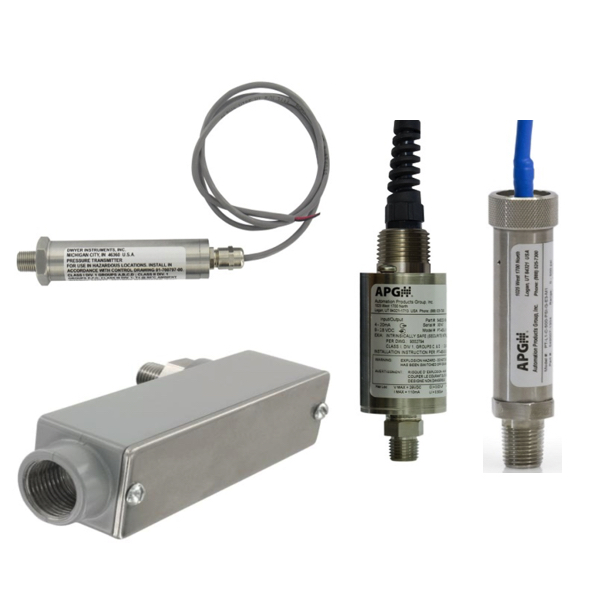
Pressure sensors and transmitters are devices used in many industries to measure and monitor the pressure of gases and liquids. When a pressure sensor is used, a change in pressure causes the sensor to react and convert the pressure change into an electrical signal. This electrical signal can then be used to collect data or for real-time control of a system. In hydraulic systems and HVAC applications, for example, pressure sensors do essential work that ensures the proper operation of the systems they monitor. Pressure transmitters take the measured pressure and convert it into output signals that can be transmitted to the systems monitoring and controlling industrial processes.
There are many configurations for these different devices, including sensors that measure the pressure difference between two points (differential pressure sensors) and a kind of pressure sensor that is very accurate and that works well in a wide variety of environments (pressure transducers). In harsh environments, these devices provide trustworthy measurements, due to their heavy-duty stainless steel construction.
 ABB Pressure Sensors-Transmitters
 ACI Pressure Sensors-Transmitters
 APG Pressure Sensor-Transmitters
 API Pressure Sensors-Transmitters
 Dwyer Pressure Sensors-Transmitters
 Omega Pressure Sensors-Transmitters
 Tek-Trol Pressure Sensors-Transmitters
 Telemecanique Pressure Sensors-Transmitters


More Information about Pressure Sensors and Transmitters
Across a wide swath of demanding applications, pressure sensors and transmitters are used to great effect. They are built both in compact versions, for use in space-limited environments, and in rugged formats, for use in punishing conditions. Their high accuracy, outstanding durability, and versatility across an extensive range of pressures make them a critical component of safe and efficient operations almost anywhere in the industrial sector. Pumps, compressors, and clean rooms (among many other applications) use pressure devices to manage systems effectively and to deliver electrical signals that keep them running smoothly.
FAQs
What is the difference between a pressure sensor and a pressure transmitter?
A pressure sensor is the sensing element that detects pressure and converts it into an electrical signal, while a pressure transmitter conditions that signal and outputs a standardized format such as 4–20 mA, 0–10 V, or a digital protocol. Transmitters are designed for long-distance signal transmission and integration with PLCs, SCADA, and control systems, making them ideal for industrial automation and process control applications.
What applications commonly use pressure sensors and transmitters?
Pressure sensors and transmitters are widely used in manufacturing, HVAC systems, water and wastewater treatment, oil and gas, chemical processing, power generation, and industrial automation. They provide continuous pressure monitoring for system control, safety protection, energy optimization, and compliance with operational standards. Accurate pressure measurement is critical anywhere pressure impacts performance, safety, or product quality.
How accurate are pressure sensors and transmitters?
Accuracy varies by technology and model, with many industrial pressure sensors and transmitters offering accuracy ranges from ±0.05% to ±1% of full scale. Factors that affect accuracy include temperature changes, pressure cycling, vibration, electrical noise, and calibration quality. Selecting the proper sensor range and maintaining regular calibration are essential for long-term measurement reliability.
How do I choose the right pressure sensor or transmitter for my application?
Choosing the correct device depends on pressure range, media compatibility, process temperature, environmental conditions, required accuracy, and output signal type. Additional considerations include mounting method, wetted materials, response time, and regulatory requirements. Proper selection ensures reliable measurement, longer service life, and seamless integration with control systems.
Do pressure sensors and transmitters require calibration and maintenance?
Yes, pressure sensors and transmitters require periodic calibration and inspection to ensure accurate performance over time. Calibration intervals depend on application criticality, operating conditions, and industry standards. Routine maintenance helps detect sensor drift, mechanical wear, or electrical issues early, supporting system reliability and measurement confidence.